Most product pages for custom tees never say how the design got onto the fabric. You find out when the box arrives and you run a thumb across the front. Smooth and almost invisible, or slightly rubbery like a sticker? Both can be a digital print shirt, and the difference matters once the shirt starts going through the wash.
A digital print shirt is a garment decorated by a computer-driven inkjet process instead of screens or thread. The two main methods are DTG (direct to garment) and DTF (direct to film). DTG sprays ink straight into the fibers, while DTF prints the design onto a film that is heat-pressed onto the shirt. DTG feels softer on cotton; DTF sticks to more fabric types and looks brighter on dark colors.
We're an embroidery shop, so we don't print anything. We still get asked about digital / DTG printing every week, usually by people deciding between a printed tee and a stitched one. This guide covers how each method works, how to spot them, how to wash them, and when thread is the better call.
What is a digital print shirt
This section is for anyone who has seen "digital print" on a listing and wondered what it means. The short version: a printer, not a person with a squeegee, put the image on.
Traditional screen printing needs one mesh screen per color, so setup costs make sense only for bigger runs. A digital printer reads an image file and lays down every color in one pass. That makes it practical for a single shirt, a photo, or a design with gradients that would need a dozen screens.
The trade-off is texture and lifespan. Ink sits in or on the fabric, and how well it survives depends on the method, the fabric and how you wash it.
How digital printing on t-shirts works
If you're ordering custom tees or comparing two shops that use different methods, this is the part to read. Both processes start with the same digital file. What happens next is very different.
Direct to garment (DTG)
A DTG printer works like an oversized desktop inkjet. The blank shirt is loaded flat on a platen, and water-based ink is sprayed directly onto the cotton. That's why some people call it direct to fabric printing.
Light shirts can go straight in. Dark shirts need a pretreatment spray first, then a white ink layer under the colors so they don't sink into the dark fibers. After printing, the ink is cured with heat.
Because the ink soaks into the fibers, a good DTG print has almost no hand feel. It works best on 100% cotton or high-cotton blends. On polyester the ink has little to grip.
Direct to film (DTF)
DTF takes a detour. The design is printed in reverse onto a clear PET film, with a white layer behind the colors. While the ink is wet, a fine adhesive powder is shaken over it and melted. The finished transfer is then pressed onto the shirt with a heat press, and the film is peeled away.
Since the glue does the gripping, DTF handles digital printing on garments that DTG can't. Think polyester, nylon, blends, even some bags and hats. Colors stay bright on black shirts.
The catch is the feel. You get a thin, flexible layer on top of the fabric, and on a large design that layer can trap heat.
Is DTF the same as heat transfer vinyl?
No, though both end with a heat press. Vinyl (HTV) is a solid colored sheet that a cutter trims into letters or shapes, and the extra material is picked away by hand. Each color is a separate layer.
DTF is printed, so one transfer can hold a full-color image with gradients. Vinyl is thicker and works best for simple text, names and numbers, the kind you see on the back of a team jersey. If you can feel distinct, stacked layers of color, it's probably vinyl.
Are direct to print shirts the same as DTG?
Usually, yes. "Direct to print shirts" is a common search phrase, but the industry term is direct to garment. When a shop advertises direct-to-print, ask whether they mean DTG or DTF, because the answer changes how the shirt will feel.
DTG vs DTF side by side
Use this list when you're choosing a method for a specific shirt rather than learning the theory.
- Fabric. DTG wants cotton. DTF handles cotton, polyester and blends.
- Feel. DTG is soft and breathable once washed. DTF has a smooth, slightly plastic surface you can feel with your fingertips.
- Dark shirts. DTG needs pretreatment and a white base, and colors can look a touch muted. DTF colors pop on black without extra steps.
- Detail. Both handle photos and gradients. Fine lines and tiny text come out sharp from a high-resolution file.
- Aging. A DTG print fades gradually, like a vintage tee. A DTF transfer keeps its color longer but can crack or lift at the edges after a bad press or hot washes.
- Order size. Both suit one-offs and small runs. For large orders of a simple one or two color logo, screen printing is usually cheaper.
When a digital print shirt makes sense, and when it doesn't
Read this before you order, especially if you're buying for a group or a gift. The method should follow the design and the quantity, not the other way around.
Digital printing wins for a single shirt with a photo on it. A birthday tee with a grandkid's face, a pet portrait, a concert-style collage: none of those would be practical with screens. It also suits small batches where every shirt is a little different, like a family reunion where each person's name goes on the back.
It's a weaker choice for 80 identical shirts with a two-color logo. Screen printers can run that job quickly, and the price per shirt drops as the count goes up. Screen-printed ink also sits in a thick layer that handles years of washing well.
Then there's the everyday shirt you want to wear for a long time. Here the design matters most. Short phrases, names and small chest logos don't need a printer's color range, and thread handles them while keeping its texture.
One quick rule of thumb we give people:
- Photo or painting? Print it, DTG on cotton or DTF on synthetics.
- Large run, few colors? Screen print.
- Words, a name or a simple outline you'll wear for years? Embroider it.
Choosing the blank shirt for DTG or DTF
This matters most if you're supplying your own blanks or picking a style on a print shop's site. The shirt underneath decides a lot of the final result.
For DTG, cotton content comes first. Ring-spun cotton has a smoother surface than open-end cotton, so the ink lands evenly and details stay crisp. Tri-blends with a small share of cotton feel great but print lighter and softer in color. That can look nicely worn-in, or just faded, depending on what you wanted.
Shirt color changes the job too. A white or light gray tee needs no pretreatment, so the print stays softest there. On black or navy, the white underbase adds a little stiffness, more noticeable on large solid areas.
DTF is less picky about fiber, but fabric weight still counts. Thin, stretchy shirts can pucker around a big transfer. A medium or heavyweight tee holds the transfer flatter and keeps it from cracking when the shirt flexes.
How to tell which print method a shirt uses
Bought a tee from a marketplace with no details? These checks take about a minute and need nothing but your hands.
- Run your fingers over the design. If you can barely feel it, it's likely DTG. A smooth, slightly raised film points to DTF or vinyl.
- Look at the edges up close. DTF transfers have a crisp outline where the film ends. DTG edges blend into the weave.
- Gently stretch the printed area. DTG moves with the fabric. A DTF layer stretches too, but you may see the surface sheen change.
- Turn the shirt inside out. Heavy DTG on a dark tee can show faint ink or pretreatment marks on the back of the fabric. DTF usually leaves the inside clean.
- Check the fabric label. A 100% polyester shirt with a full-color print is almost never DTG.
- Still unsure? Email the seller and ask. A shop that knows its process will answer in one line.
How to wash digital printed shirts so they last
This applies to any digital printed shirts you already own, DTG or DTF. Most early cracking and fading comes from heat and friction, not from the print itself.
- Wait a day or two after delivery before the first wash, so the ink or adhesive has fully settled.
- Turn the shirt inside out. The design then rubs against the drum less.
- Use cold water and a gentle cycle with mild detergent.
- Skip bleach and fabric softener. Softener can leave a film that weakens the bond on transfers.
- Hang to dry, or tumble dry on low. High dryer heat is what makes DTF edges lift.
- Never iron directly on the print. If you must, iron inside out with a cloth between.
Our own care rules for stitched clothing are almost the same, minus the worry about peeling. They're in our guide on how to wash embroidered clothing without ruining it. Dense stitched text gets the same routine. Our I Come From A Long Line Of People sweatshirt is a good example.

Mistakes to avoid when ordering custom DTG shirts online
These come up when you upload your own design to a print shop. Each one is easy to fix before you pay.
Uploading a low-resolution file
A logo copied from a website or a phone screenshot looks fine on a monitor and blurry at 12 inches wide. Most shops asking for DTG printing online want a 300 DPI file at print size, or a vector.
Picking polyester for DTG
Performance tees feel nice, but standard DTG ink doesn't bond well to them. Choose cotton for DTG, or ask for DTF if you need a synthetic shirt.
Backgrounds that aren't really transparent
A white box around your design will print as a white box on a colored shirt. Check the file on a dark background before uploading.
Thin lines on dark garments
Hairline details can disappear once the white underbase spreads a little. Thicken them slightly.
Expecting screen-print vibrancy
Custom DTG shirts on black can look softer in color than the mockup on your screen. If a bold, saturated look matters, ask for a photo of a real sample.
When embroidery is the better choice
This part is for people buying a shirt to wear for years, or a gift that needs to survive a lot of laundry. Digital printing is the right tool for photos and full-color art. For words and simple graphics, thread is hard to beat.
We stitch everything at Me Do Embroidery, so take our bias into account. Our view is simple: printed graphics tend to crack and peel after 20 to 30 washes, while thread sits inside the fabric.
Every design gets a stabilizer layer behind it so the stitching stays flat. New designs are test-run on scrap fabric first, to adjust stitch density. A detailed design takes 4 to 9 minutes on the machine.
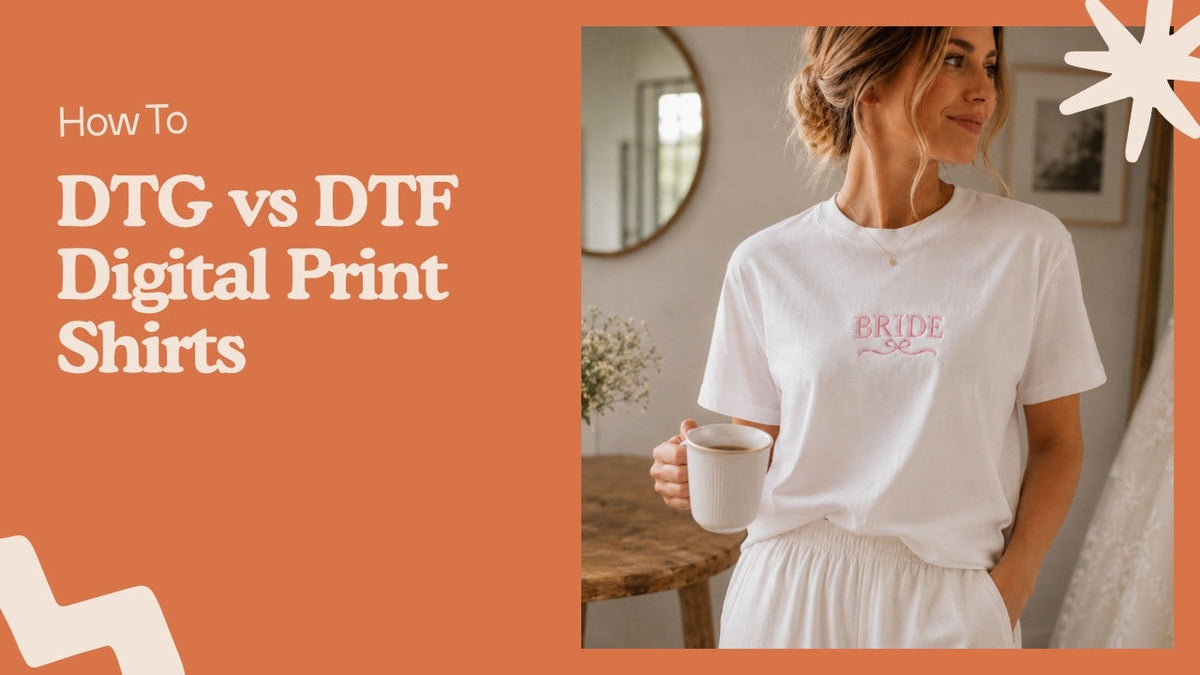
The difference shows best on a plain tee. Our Bow Bride embroidered t-shirt has a small pink word and bow stitched at the chest, the kind of detail a print would flatten.

Text-heavy designs are where embroidery earns its price.
Take the line on our Sorry About the Things I Said When I Was Right sweatshirt. It's stitched in French DMC thread, which doesn't fade or bleed. Digital tee shirt printing would cost less up front for the same words. It just wouldn't look this crisp after a winter of washes.
Embroidery has limits too. It can't reproduce a photo, it gets stiff over very large areas, and very small lettering loses legibility. A family picture should be printed. A phrase, a name or a simple outline is better stitched.
You can browse what that looks like in our embroidered t-shirts and embroidered hoodies and sweatshirts. For more on lifespan, we compared embroidery vs screen printing. We also looked at how embroidery holds up compared to printing over time.
Buying a printed or stitched shirt as a gift
This is for anyone ordering a custom shirt for someone else, where size, timing and returns matter as much as the print method.
Start with the deadline. Made-to-order shirts, printed or stitched, aren't sitting in a warehouse. Ours take 3 to 7 business days in total, production plus shipping within the US. Weekends and US holidays don't count, so we suggest ordering at least 10 days before you need it.
Sizing is the next trap. Our sweatshirts and tees run true to size with a relaxed fit, so someone between sizes should go up one, not two. Not sure of their size at all? A hat is the safe pick, since it adjusts to roughly 21 to 24 inches around.
Personalized items deserve a slow read before checkout. Names with a typo can't be returned, whether it was printed or stitched. Check the spelling twice.
Last, match the joke to the person. Sarcasm that lands with your sister might be awkward for a coworker you met last month. Pick something milder for people you don't know well. And include a care note: cold wash, inside out, no iron on the design.
Every piece we make is stitched to order. Unworn, non-personalized items can be returned within 30 days.
Got one stitched wrong or damaged? Send a photo within 7 days. We'll replace it, and you keep the old one.
Digital print shirt FAQ
Is a digital print shirt good quality?
It can be. Quality depends on the printer, ink, fabric and curing, so two digital prints from different shops can last very differently.
Which lasts longer, DTG or DTF?
DTF transfers usually hold their color longer, while DTG prints fade more gradually and don't crack. Washing cold and drying on low extends the life of both.
Can you do DTG printing on polyester shirts?
Standard DTG ink is made for cotton and bonds poorly to polyester. For polyester or performance shirts, DTF or sublimation is the usual choice.
Does a DTG print crack?
A properly cured DTG print rarely cracks, because the ink is absorbed into the fibers. It's more likely to fade slowly over many washes.
Is digital printing cheaper than screen printing?
For one shirt or a small run with many colors, digital printing is usually cheaper because there are no screens to set up. For large orders of a simple design, screen printing tends to cost less per shirt.
Is embroidery better than a digital print?
Embroidery lasts longer for text, names and simple graphics because the thread is stitched into the fabric. Digital printing is better for photos, gradients and full-color artwork.