Ask someone what they remember from a three-day expo and you rarely hear about the biggest booth. They mention the bakery with warm samples. Or the two people in matching green aprons who knew everyone's name by day two. Buyers walk past hundreds of tables, keep one or two details, and the rest blurs.
Good trade show marketing tips come down to giving visitors that one detail on purpose. For a small brand, that means picking the right show and telling people your booth number before they arrive. Then make the booth readable from the aisle and follow up within two business days. The 27 tips below follow that order, from booking the space to the week after you pack it up.
What Tradeshow Marketing Means for a Small Brand
This section is for owners who have never exhibited, or who went once and came home unsure it paid off. Tradeshow marketing covers everything that gets the right people to your booth and turns those talks into orders. The booth is only the middle part.
There are two broad kinds of shows. At a consumer show, like a holiday market or a home expo, visitors buy on the spot. You are measured by sales that day.
B2B trade show marketing works differently. Buyers from shops, offices or distributors come to compare suppliers and collect contacts, then order weeks later. Knowing which kind you are walking into changes almost every choice below, from banner text to how much stock you pack.
Build a Trade Show Marketing Strategy Before You Book
Read this before paying a deposit. Most of what goes wrong at a show was decided at the planning stage, when the booth fee felt like the only cost.
1. Pick the show by who walks the floor
Organizers publish attendee breakdowns by job title, region and industry. Ask for last year's numbers if they are not on the website. A small regional show full of buyers in your category beats a famous one. At the famous one, you may be the only booth selling what you sell.
2. Write down one number you want to hit
Exposure is not a goal. Pick one figure, such as 40 real conversations, 12 wholesale contacts or $3,000 in booth sales. That number tells you how many people to staff and how many samples to bring. It also gives you an honest answer on the drive home.
3. Budget for everything that is not the booth
The floor space is often less than half of what you will spend. Add travel, hotel nights, booth electricity, display shipping, signs and samples. Then add staff apparel, meals and the hours you are away from the shop.
Put each line in a spreadsheet before you commit. The extras catch small brands.
4. Decide what the booth is for
A booth built to sell on the spot needs stock, a card reader and room for a line. One built for leads needs a place to talk, a way to record notes and samples to take home. Doing both at full strength in a 10x10 space usually means doing both badly.
5. Work backward from the show date
Here is a simple timeline for a small team booking a show about ten weeks out:
- Ten weeks before: confirm the booth, request the exhibitor kit and note every deadline for electricity, carpet and shipping.
- Eight weeks before: lock the booth layout and the single line of text that will go on your main sign.
- Six weeks before: order signs, printed cards and any custom staff apparel so there is time to fix a mistake.
- Four weeks before: email your customer list and post your booth number.
- Two weeks before: do a full test setup at home or in the shop, then time how long it takes.
- Show week: pack a kit with tape, zip ties, chargers, extension cords, pens and snacks.
Trade Show Advertising Before the Doors Open
These tips are for brands whose biggest worry is that nobody will know they are there. Trade show advertising starts weeks before setup, and much of it costs nothing.
6. Claim your free directory listing
Almost every show runs an exhibitor directory on its website or app. Fill in every field and upload a logo and a product photo. Write the description in the plain words a buyer would type into a search box. Plenty of exhibitors leave this blank, so a complete listing already puts you ahead.
7. Send your booth number to people who already know you
Your existing customers are the easiest visitors to win. Send a short email with the show name, dates and booth number. Add one reason to stop by, such as a new product, a show-only price or a sample. Resend it on opening morning.
8. Show the booth before it exists
Photograph your test setup and post it a week ahead with the booth number in the caption. People who follow the event hashtag start planning routes before they arrive. A photo also tells them what to look for when they are scanning a crowded aisle.
9. Treat paid sponsorships as a test
Organizers will offer tradeshow advertising packages: lanyard logos, bag inserts, banner space near the entrance. Some work well for a brand with a clear offer.
Before you pay, ask how many attendees came last year and what past sponsors of your size thought of the package. No clear answer? Start with the free options.
How to Stand Out at a Trade Show With a Small Booth
This section is for anyone working with a standard 10x10 space and a modest display. You will not outspend the corner booths, so the goal is to be easy to read and easy to approach.
10. Put one readable line at eye level
Visitors decide in two or three seconds whether to slow down. A sign of eight words or fewer at head height does more than a large logo near the ceiling. "Embroidered aprons for bakeries and cafes" tells a buyer more than a brand name they have never heard.
11. Clear the front edge
A table across the front of the booth works like a counter at the DMV. Move it to one side or to the back so people can step in without feeling committed. Keep chairs out of sight. Sit on breaks only.
12. Bring your own light
Convention hall lighting is flat and often dim at the edges. A couple of clip-on LED lights aimed at your best product make it look better in person and in photos. Check the exhibitor kit for power rules first, since some halls charge separately for outlets.
13. Give people something to hold
Touch sells. Leave samples out where visitors can pick them up, turn them over and feel the weight. Once someone is holding your product, the conversation has already started.
14. Dress the team so visitors can find you
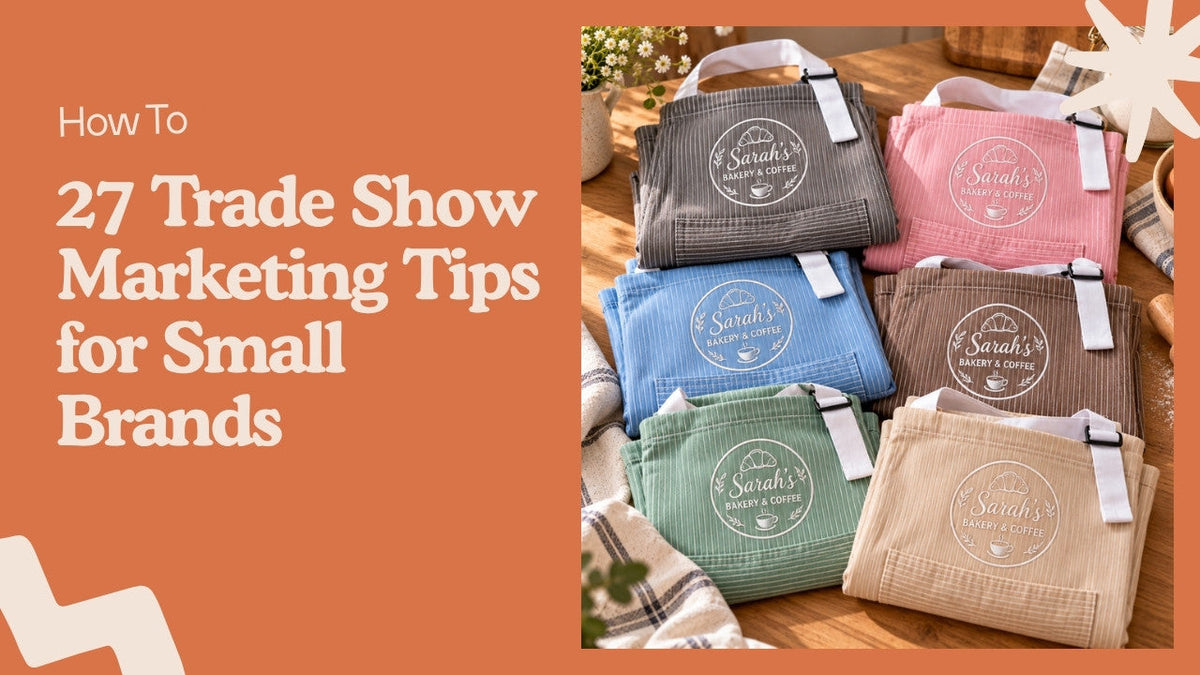
Matching staff apparel helps in two ways. Visitors can tell who works the booth. And anyone who met you on day one can spot you again on day two. Pick one color that matches your sign and keep it the same across shirts, hats or aprons.
For food, craft and cafe brands, a logo apron looks like part of the work rather than a costume. Our custom logo embroidered apron is made to order and stitched in French DMC thread, which does not fade or bleed.
Embroidery also does not crack the way a print can after 20 to 30 washes. That matters if the same gear goes to every show this year. We compare the two methods in our post on embroidery vs screen printing.

Trade Show Tips for Exhibitors Working the Booth
These are for the people actually standing there for eight hours. Booth staff decide whether a pause in the aisle turns into a lead.
15. Let one small joke start conversations
At casual shows, a funny line on a cap gives strangers an easy opening. "Ha, same" is an easier first sentence than "So what do you do?"
Our Became Important At Work washed cap carries the kind of office joke most visitors have lived through. Keep it light and work-related. Skip anything a conservative buyer could take the wrong way. A formal B2B show is a different room, where plain branded gear is the safer choice.

16. Ask about their week before your product
"What are you hunting for at the show?" gets a real answer far more often than a product pitch does. The reply tells you in seconds whether this is a buyer, a fellow exhibitor or someone killing time.
17. Keep the first conversation to about two minutes
If someone is a good fit, book a proper follow-up instead of giving a full demo while others wait. Short first talks let you meet more of the right people. A scheduled call later also gets better attention than a rushed one in a loud aisle.
18. Run shifts of two to three hours
Concrete floors are brutal. Energy drops faster than people expect after a few hours of standing and talking to strangers. Even a two-person team can rotate so one person is always fresh. Write the schedule down, or it will slide by lunch on day one.
19. Eat away from the booth
Chewing reads as closed. Take meals in the break area or behind a curtain. Keep water and fast snacks out of view for the long stretches between.
20. Write a note on every lead within a minute
Badge scans and business cards hold contact details, not context. Right after each talk, jot two lines: what the person needs and when they plan to buy. By the end of day two, those notes are the only way to tell twenty similar faces apart.
Giveaways People Keep
This section suits brands deciding where a small promo budget should go. One useful item beats a pile of cheap ones that get left in the hotel room.
21. Choose one item people carry for the whole show
Attendees collect brochures, samples and catalogs all day. They need somewhere to put them, and a sturdy tote solves that in the first hour. Your name then walks every aisle of the hall. A well-made bag keeps going to the grocery store long after the badge is in a drawer.
Heavy canvas holds up to that kind of use. Our custom name embroidered striped tote bag takes a short name or brand line in stitched lettering. You can see the rest of the range in our embroidered tote bags collection.

22. Save the better item for real conversations
Keep a basic giveaway in a bowl for anyone passing. The item that costs real money stays under the table for people who stopped, talked and left contact details. You spend less, and likely buyers go home with the piece they will remember.
23. Put your name where it will be seen
Nobody reads the bottom of a mug. Put it on the outside of a bag, the front of a cap or an apron chest. It should show every time the item is used.
After the Show
Most of the trade show success tips that actually pay off happen after the hall closes. This part is for the tired drive home and the week that follows.
24. Sort leads the same night
Do it tonight. Split them into three piles: ready to talk now, interested later, and not a fit. It takes twenty minutes in the hotel room and saves a full morning once you are back at work.
25. Send the first follow-up within two business days
Mention the thing they told you at the booth, attach anything you promised, and suggest a time to talk. A short, specific email on Tuesday beats a polished one two weeks later. By then they have heard from fifty other exhibitors.
26. Count the cost per real conversation
Divide everything you spent by the number of conversations that went somewhere. Comparing that figure across shows tells you which events to book again. It works better than gut feel, which tends to favor whichever show had the nicest hotel.
27. Write a debrief while you still remember
Keep it to one page. Write down what sold, what visitors asked that you could not answer, what ran out and what came home untouched. Then read it again before you book next year's space, because memory will have smoothed over the parts that went badly.
Trade Show Marketing Examples for Small Brands
These three scenarios show how the same tips change by business type. They are illustrations, not customer stories.
- A neighborhood bakery at a regional food expo. The goal is wholesale accounts with cafes. Staff wear matching logo aprons, and samples sit at the front edge. The main sign names the three products sold wholesale, and every cafe owner who tastes something gets a card with a handwritten note.
- A five-person software firm at a B2B show. They skip the giveaway bowl and book short demos ahead by emailing customers the booth number. Two people work the aisle in matching shirts while one runs demos. Leads get sorted in the hotel each night.
- A maker selling at a holiday gift market. Sales happen on the spot, so the booth carries stock, a card reader and room for a short line. A sign at eye level lists price ranges. Buyers who spend over a set amount leave with a tote showing the shop's name.
Mistakes That Waste a Booth Fee
Most of these come from planning too late or packing too little. Check the list before every show.
- Ordering custom gear the week before the show, with no time to fix a misspelled name or a wrong size.
- Staffing the booth alone for a full day with no one to cover breaks.
- Bringing a sign with a tagline but no plain description of what you sell.
- Handing the expensive giveaway to anyone who reaches for it.
- Leaving follow-up until "after things calm down", which usually means never.
- Choosing a show by its size instead of by who attends.
Where Embroidered Gear Fits at a Booth
This part is for brands thinking about staff apparel or keepsake giveaways from us. We make everything to order in the USA, so nothing comes from a warehouse shelf.
Production takes 1 to 3 business days and shipping takes 2 to 4. That is 3 to 7 business days in total, with tracking. Weekends and US holidays do not count, so order at least 10 days before you need the items. Go earlier if the show falls near a holiday.
Personalized items cannot be returned, so check the spelling of every name and logo before you order. If something arrives stitched wrong or damaged, send us a photo within 7 days. We will send a replacement without asking you to ship the original back.
Our hats are cotton twill with an adjustable strap for heads of about 21 to 24 inches. No sizing questions. Browse the embroidered apron range for food and craft booths. For a lighter look at casual events, try the work and coworker humor collection.
Our guide to ordering custom embroidered merch walks through the ordering steps. To keep stitching flat between shows, read our post on washing embroidered clothing. The short version: turn it inside out, wash cold and never iron directly on the design.
Trade Show Marketing FAQ
What is trade show marketing?
Trade show marketing is how a business plans, promotes and follows up on an industry event to turn booth meetings into sales. It covers the weeks before, the booth itself and the outreach afterward.
How far ahead should a small brand plan for a trade show?
Start about ten weeks out if you can. That leaves room to meet exhibitor deadlines, print signs, order custom apparel with time for corrections and tell customers where to find you.
How can brands stand out at trade shows on a small budget?
Put one clear sign at eye level, clear the front of the booth and leave samples where people can touch them. Dress the team in one matching color, because a prepared team does more than an expensive display.
What should booth staff wear at a trade show?
Wear something matching that fits the industry and is comfortable to stand in all day. Branded polos or sweatshirts suit most shows, and logo aprons work well for food, cafe and craft booths.
How soon should you follow up after a trade show?
Send the first message within two business days while the conversation is still fresh. Mention something specific the person said so they remember who you are.
What is the future of trade show promotions?
Promotions are moving toward fewer, more useful giveaways and toward digital follow-up such as QR codes and lead-capture apps. Brands that plan the after-show contact as carefully as the booth tend to get more from each event.