Most of the money from a walk is raised weeks before anyone laces up. The route, the music and the banner matter. Still, gifts arrive because walkers asked their friends, one message at a time. That is the idea behind walkathon P2P fundraising, and it shapes how you should plan everything else.
Walkathon P2P fundraising means each walker gets a personal donation page and asks their own network to sponsor them. The organizer no longer collects every gift alone. To run one, form a small team and pick a date and route. Choose a peer-to-peer platform, coach your walkers, then thank every donor.
What Is a Walkathon and How Does Peer-to-Peer Fundraising Fit In?
This section is for first-time organizers who want the basics before committing to a date.
A walkathon is a charity event where participants walk a set route, and supporters pledge money for the effort. Pledges can be a flat gift or an amount per mile. Peer-to-peer (P2P) fundraising adds a simple rule: every walker becomes a mini fundraiser with their own page, link and goal. A school can use it, and so can a church, a sports club or a local nonprofit.
Walkathon Planning Timeline: 12 Weeks at a Glance
Use this when you need to know what happens when. Shift the weeks if your event is bigger or smaller.
- Weeks 12 to 10: choose the committee, the cause, a goal and a date.
- Weeks 10 to 8: book the route, check permits and pick a platform.
- Weeks 8 to 6: open registration and send walkers their kit of message templates.
- Weeks 6 to 3: run a mid-point push, share a leaderboard and order shirts or gear.
- Weeks 3 to 1: confirm volunteers, water stops and a rain plan.
- Week of the walk: send reminders, print signs and charge your phones.
- Week after: thank donors, report the total and ask walkers what to change.
Twelve weeks is a minimum for a small walk. Larger events with sponsors and road closures need more runway.
How to Plan a Walkathon in 9 Steps
These steps are for the organizer who owns the spreadsheet. Work through them in order, because later choices depend on the earlier ones.
Step 1. Set a Goal and Name One Cause
Pick a single beneficiary and one dollar target. "Raise $15,000 for the new playground" gives walkers a sentence to repeat. "Support our community" does not.
Step 2. Build a Small Planning Team
Four to six people can run a local walk if each owns one area: route, money, volunteers, communication. Write the owner next to each task so nothing is left to "someone".
Step 3. Choose the Date and the Route
Weekend mornings suit most families. Walk the route first and time it. A loop that returns to the start makes registration, water and first aid easier to staff. Line up an indoor backup, such as a gym or rec center, before you announce the date.
Step 4. Pick a P2P Fundraising Platform
Your platform decides how easy it is for a walker to ask for money. The next section lists what to compare, and it is worth an hour before you sign up.
Step 5. Recruit Walkers Who Will Actually Ask
Ask board members, teachers, coaches and past donors first. Team captains help a lot: a captain who recruits ten friends does more than ten posters.
Step 6. Coach Your Fundraisers
Most walkers have never asked for a donation. Send them a ready-to-copy email, a text and a social post, plus one example of a personal story. Tell them to ask family first, because those gifts usually come fastest.
Step 7. Keep a Weekly Scoreboard
Track registrations, pages with at least one donation, and total raised. If many walkers have signed up but few have a gift, the problem is coaching, not recruiting. Share a leaderboard so friendly competition does the nudging.
Step 8. Run the Walk Day
Arrive early, keep check-in simple and give a short thank-you speech before the start. Announce how much has been raised so far. Walkers like to see the number their effort helped build.
Step 9. Thank Everyone Within 48 Hours
Send each donor a personal note, then share the final total and a photo. Donors who hear what happened with their gift are the ones who give again next year.
What to Look for in a P2P Fundraising Platform
Read this before you pick a tool, especially if your group has no budget for surprises.
- A personal page for each walker, with a goal bar and photo.
- Easy sharing by email, text and social media.
- Fee structure: some tools take a percentage of each gift, others a flat amount per donation. Ask who pays the card processing fee, too.
- Fast payouts, so you can show donors results soon.
- Reports you can export for your thank-you list.
Walkathon Mistakes to Avoid
Skim this list if you want to save yourself a stressful month.
- Waiting for walkers to find their own words. Give them templates.
- Choosing a date that clashes with a local game, holiday weekend or school exam week.
- Skipping the weather plan, then moving the walk at the last minute and losing walkers.
- Counting registrations as success when most pages have zero gifts.
- Thanking donors only once, a month late.
Walkathon Shirts and Gear for Your Walkers
Matching gear turns a crowd into a team, and it makes your cause visible on the route. This part is for organizers who want something walkers will keep wearing after the event.
We embroider every item to order in the USA with French DMC thread, which does not fade or bleed in the wash.
Totes help. Our canvas totes hold water, snacks and a rain layer, and our caps adjust to fit about 21 to 24 inches around the head. Browse the embroidered tote bags and embroidered baseball hats. For volunteer thank-yous, look at personalized embroidered gifts.
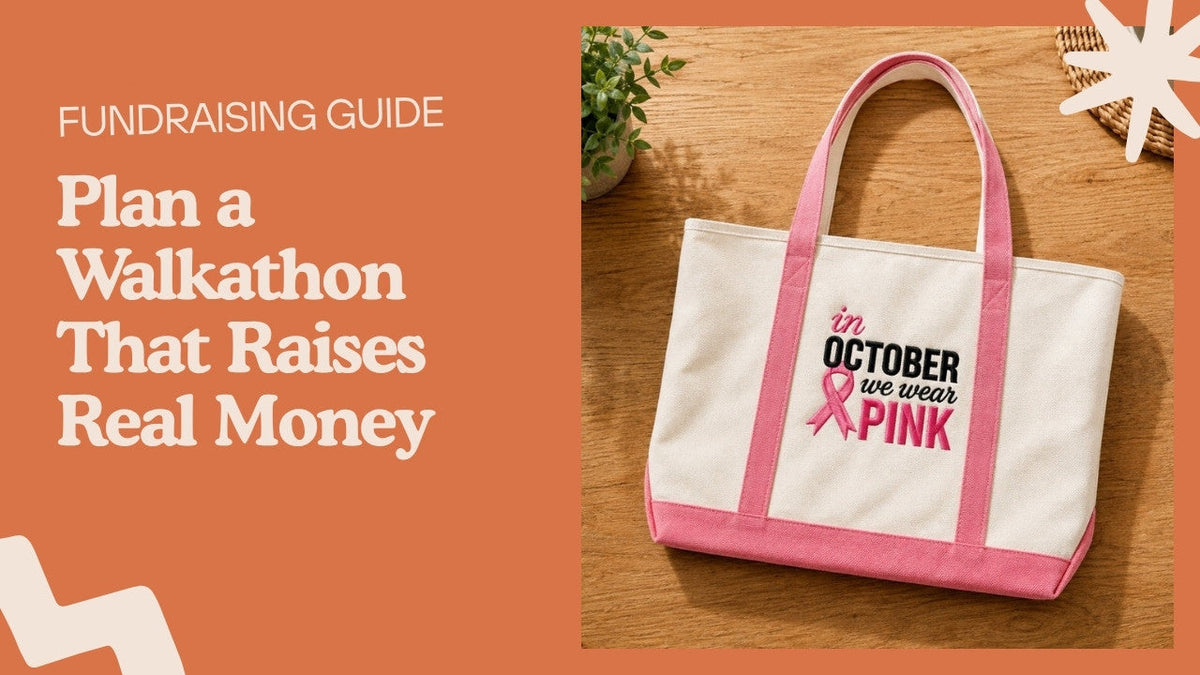
Walking for breast cancer research? The In October We Wear Pink embroidered tote bag and the breast cancer month collection fit that cause.

Order early. Production takes 1 to 3 business days and delivery 2 to 4, so allow at least 10 days before the walk. Personalized items cannot be returned, so check every spelling twice.
Need shirt inspiration for your group? Our guide to team shirt ideas has options for clubs and group trips.
Walkathon Day Checklist
Print this for your volunteer captain. It covers what to have in the car the morning of the event.
- Check-in table, sign-in sheets and spare pens.
- Water, first aid kit and a clear route map.
- Signs for each mile or lap and a finish banner.
- A phone or screen showing the live fundraising total.
- Trash bags and a volunteer who owns cleanup.
A small team that stays together is easier to run than a large crowd. If you want an icebreaker for the start line, see our list of fun team building activities.
Walkathon FAQ
How do you start a walkathon fundraiser?
Choose a cause and a dollar goal, then form a small team. Set a date and route, and sign up with a peer-to-peer platform so walkers can collect pledges online.
How long does it take to plan a walkathon?
A small local walk can come together in about 12 weeks. Events with road closures, sponsors or hundreds of walkers should start six months to a year ahead.
What is the best time of year for a walkathon?
Pick mild weather and avoid holiday weekends. Spring and early fall suit most regions, but the right answer depends on your local climate and calendar.
How much should walkers aim to raise?
Set a modest personal goal, such as a number five or six friends can reach, then let walkers raise it. Early gifts from family build momentum.
Do walkers need matching shirts?
No, but matching shirts or caps make teams easy to spot and help the event feel organized. Order at least 10 days ahead so everything arrives in time.
Where can I see more gear options?
Our best sellers are a good starting point if you want ideas for walkers and volunteers.