Most logo shirts end up in a drawer. Someone picks one up at an open house and says thanks. Then it never gets worn, because the fabric is thin, the fit is boxy, or the logo is the size of a dinner plate. A branded apparel business marketing plan comes down to one test: would a person wear this on a Saturday by choice?
Branded apparel business marketing means putting your business name or logo on clothing that staff, customers, and partners wear in public. It works when the item is comfortable and good-looking enough to be worn again and again. Each wear puts your name in front of new people at no extra cost. Start with one item tied to one goal, then expand once you see it being worn.
We make embroidered sweatshirts, hats, totes, and aprons to order in the USA, including aprons stitched with a shop's own logo. This guide covers what we know from the machine side of the work.
It also covers what most guides skip. When does it waste money? How do you design a logo that stitches cleanly? And how can you tell it is working?
Why branded apparel business marketing works
This section is for owners still deciding whether branded clothing deserves a slice of the marketing budget. Read it before you price anything.
What a worn logo does that an ad cannot
An ad runs until you stop paying. A good hoodie keeps going for years. Grocery runs, school pickups, and flights all put your name in front of strangers. And the person wearing it is someone they might already trust.
There is also a quieter effect inside the business. Staff in matching shirts look like a team, and customers can find help without guessing who works there. That matters in a busy coffee shop or on a job site with three different contractors walking around.
When branded apparel is the wrong spend
It is not a fix for everything. If your business has no clear name or logo yet, sort that out first, because restitching later costs money. If customers mostly find you online and never meet your staff, a better website will do more than a branded shirt.
Cheap pieces are the other trap. Nobody brags about them. A scratchy shirt with a giant logo is a cost, not an investment.
If the budget only stretches that far, buy fewer and nicer items. Give them to the people who will actually wear them.
Pick one goal before you pick a garment
Owners who skip this step usually end up with a pile of mixed items and no idea which ones helped. Decide what the clothing should do, then choose the item that fits that job.
- Staff visibility. Customers should be able to spot your team from across the room. Aprons, caps, and crewneck sweatshirts in one color do this well.
- Client thank-yous. The goal is goodwill, so the item should feel like a gift first. A quality sweatshirt with a small chest logo beats a loud T-shirt.
- Events and trade shows. Booth staff need to be easy to find, and you need something to hand out to qualified visitors.
- Merch your fans buy. Cafés, gyms, and bands often have regulars who want the logo. Here the design matters more than the logo size.
- Hiring and community. A crew wearing your name at a charity run tells locals you are part of the neighborhood.
One goal, one item, one color is a perfectly good first order. Add a second piece once the first one is getting worn.
Branded apparel ideas by type of business
Generic swag lists treat a dental office and a roofing company the same. Bad idea. Here is how we would think about branded clothing for a few common small businesses.
Bakeries, cafés, and food trucks
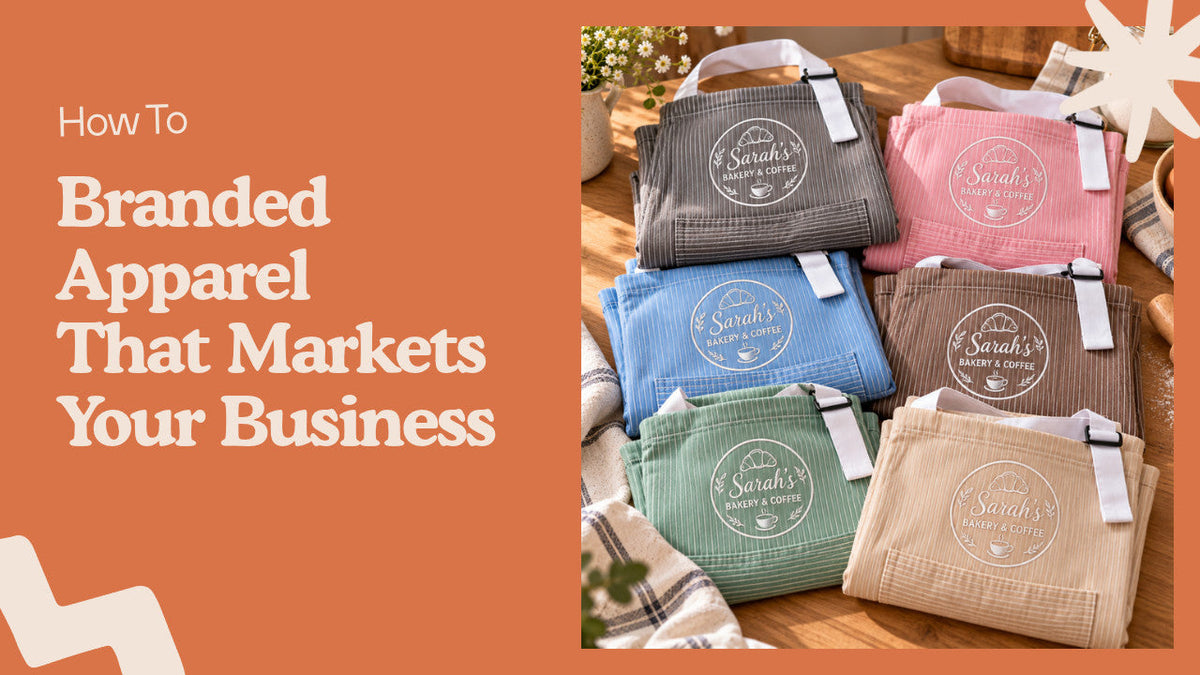
Aprons do double duty here. They protect clothes and they carry your name at eye level for every customer at the counter. Our custom logo embroidered apron is stitched with your shop name and logo. A set in a few colors lets each baker pick a favorite while the logo stays the same.

Food businesses also do well with caps for the kitchen line. Keep the logo simple, since grease and heat are hard on any fabric.
Salons, spas, and studios
Clients sit in front of a mirror for an hour looking at your stylist. A black crewneck or zip sweatshirt with a small tone-on-tone logo reads as polished. Retail pieces sell well in this setting too, because regulars already love the place.
Contractors, landscapers, and trades
Your crew is your billboard when they spend a full week working in someone's front yard while the whole street walks past. Caps help outdoors. Neighbors who see the same logo on the truck, the shirts, and the yard sign start to remember the name.
Gyms and fitness classes
Members wear gym merch to other places, which is the point. Make it something they would wear without a workout. A heavyweight sweatshirt or a dad cap gets more outings than a thin tank.
Real estate, insurance, and small offices
Client gifts carry the most weight here. A sweatshirt or tote delivered at closing or at a renewal lasts longer than a card. Keep the branding small so it feels like a gift.
Churches, clubs, and nonprofits
Volunteers in matching tops are easy to find at events, and supporters like wearing the name of a group they believe in. Totes are handy for food drives and book sales. Our embroidered tote bags are made from heavy canvas that holds up to repeat use.
Embroidery or print for a business logo
This choice affects how long the logo looks good, so it belongs early in the planning. Pick based on how often the item gets washed and how much detail your logo has.
We only do embroidery, so take our bias into account. Printed graphics sit on top of the fabric, and they start cracking and peeling after 20 to 30 washes. Embroidery is thread sewn into the fabric, so the logo lasts as long as the garment. For work clothes washed every week, that gap shows up within a few months.
Print still wins in some cases. Large full-back designs, photos, and gradients are hard or impossible to stitch. Print also usually costs less on very large runs of T-shirts, so it is a fair call for a one-day festival giveaway.
For staff uniforms, client gifts, and anything meant to last, embroidery tends to look more expensive and age better. Our longer comparison of embroidery vs screen printing goes into the details.

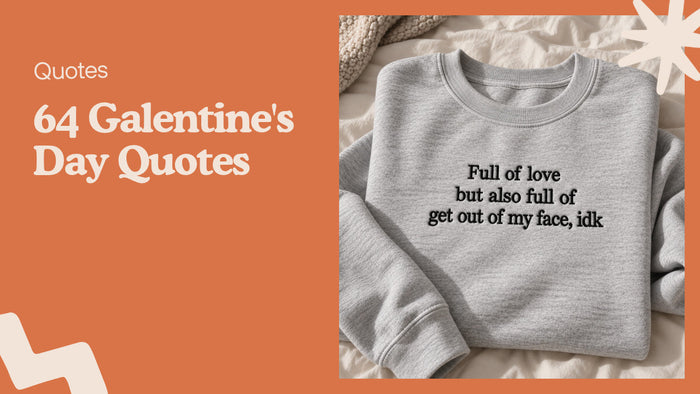
The quarter-zip above shows what lettering looks like in thread. Our custom city and state quarter-zip uses the same style. A business name with a founding year fits that layout too.
How to design a logo that stitches cleanly
Owners with a logo built for screens often find it needs a few changes for thread. The changes are small, and they make a big difference in the finished piece.
- Thin lines disappear. Hairline strokes and tiny serifs cannot hold thread well, so thicken them a little for the stitched version.
- Small text blurs. A tagline under the logo may be readable on a website and mushy at chest size. Drop it or make it larger.
- Fewer colors read better. Each thread color is a separate pass on the machine, and two or three colors usually look cleaner than eight.
- Contrast matters. Thread close to the shirt color makes text hard to read from a few feet away. Tone-on-tone suits a subtle logo, not a name you want noticed.
- Send a vector file if you have one. It gives the person digitizing your design clean edges to work from.
Every new design we take on gets a test run on scrap fabric first. That lets us adjust stitch density before it touches a real garment. Our post on what stitch count means explains why density matters, in plain terms.
Using branded apparel for client gifts
Gifts work best for service businesses with a small number of high-value clients. The aim is to make the person feel thanked, and the logo comes second.
Timing matters. A sweatshirt arriving the week a client signs feels like a welcome. The same sweatshirt sent in a December rush feels like one of forty. Good moments include a first project wrapping up, a one-year anniversary, or a referral that turned into new business.
Keep the logo small, ideally on the left chest or a cap front. Big branding turns a gift into an ad. Pair it with a short handwritten note and the item gets remembered for the right reasons. Our list of company swag ideas and corporate gifts has more options for staff and clients.
Sizing is the usual headache with gifts. Our sweatshirts are unisex with a relaxed fit, and anyone between sizes should go up one. Not sure what a client wears? A cap or a tote avoids the guesswork, since our hats adjust to fit heads from about 21 to 24 inches.
Branded clothing for trade shows and events
This part is for teams heading to a booth, a conference, or a local fair. Events reward two things: staff who are easy to spot and giveaways people take home and use.
Dress the booth team in matching tops in one strong color. Visitors scanning a crowded hall should know who to talk to without reading a badge. Bring a layer as well, because convention halls swing between freezing and stuffy.
For giveaways, split your stock. Hand out something simple to everyone who stops by. Save the nicer pieces, like a sweatshirt or embroidered cap, for people who book a meeting. Our trade show marketing tips cover the rest of the booth plan, from layout to follow-up.
How to order branded apparel for your team in 8 steps
Use this checklist the first time you order. It assumes a small business ordering for a team of a few people up to a few dozen.
- Write down the single goal for this order, such as staff visibility or client gifts.
- Choose one main item that fits the goal and the work environment.
- Get a clean logo file, ideally vector, and simplify it for thread if needed.
- Decide on placement. Left chest suits most work settings, while a centered front design suits merch.
- Pick garment and thread colors with strong contrast, and check them side by side.
- Collect sizes from each person instead of guessing, and remember a relaxed fit runs roomy.
- Order well ahead of the date you need it. Our pieces take 3 to 7 business days to make and ship within the US.
- Hand out care instructions with each piece so the logo keeps looking sharp.
Our post on how to order custom embroidered merch walks through the ordering side in more detail.
Mistakes that waste a branded apparel budget
These are the patterns that turn a good idea into boxes in a storage closet. Check your plan against them before you pay.
- Ordering for the logo, not the wearer. If the shirt is uncomfortable, nobody wears it, and the logo goes nowhere.
- Going too big on branding. Huge logos feel like a uniform people must wear, not clothing they want to wear.
- Guessing sizes. Wrong sizes get passed along or tossed, so ask first.
- Spreading money across ten cheap items. One item people love beats a bag of things they forget.
- Ordering the week before an event. Rushed orders limit your choices and leave no time to fix a problem.
- Skipping the spell check. Custom pieces with your name cannot be returned. Read the business name, phone number, and web address twice before you approve.
How to tell whether your branded apparel is working
You do not need a marketing department to measure this. A few simple checks show whether the money did anything.
Start by watching who wears it, and when, because voluntary wear on a day off is the clearest signal you get without software. If staff choose the hoodie on their day off, you picked well. If the shirts only appear when required, the item is wrong.
Ask new customers how they heard about you. Add "saw someone wearing your shirt" as an option on intake forms or at checkout. Over a few months that answer either shows up or it does not.
For merch you sell, track repeat orders and which colors move. For client gifts, notice whether clients mention the item or send photos. None of this is a precise return on investment, but it is honest, and it tells you what to reorder.
Caring for embroidered work clothes
Staff often wash uniforms the same way they wash towels, which is hard on embroidery. A short care card in the bag helps the logo last.
Turn the garment inside out and wash it in cold water on a gentle cycle. Tumble dry low or hang to dry. Do not iron directly on the embroidery, and skip bleach and fabric softener.
Fold sweatshirts instead of hanging them, and stuff caps with paper when you store them. Our thread is French DMC, which does not fade or bleed. The fabric is pre-treated, so shrinkage stays under 5% when washed cold. The full routine is in our guide on how to wash embroidered clothing.
Ready to see what fits your business? Browse our personalized embroidered gifts or the embroidered hats and caps collection. If a piece arrives with a stitching mistake, send us a photo within 7 days. We replace it at no charge, and you do not need to send the old one back.
FAQ about branded apparel for business marketing
What industry is brandandink.com in?
We could not confirm who operates brandandink.com, so check the site or a business registry for the exact owner. Similarly named companies, such as Brand & Ink Solutions in Langley, B.C., work in promotional products, branded apparel, and signage.
How far ahead should a business order branded apparel?
Plan on at least two weeks before you need it, so there is time to check the design and fix any problem. Our embroidered pieces take 3 to 7 business days to make and deliver within the US, not counting weekends and US holidays.
Is embroidery or printing better for a company logo?
Embroidery is better for items washed often or meant to last, such as staff sweatshirts, caps, and client gifts. Printing suits large, detailed, or photo-style designs and very large runs of low-cost T-shirts.
Can I return custom logo apparel?
Items made with your name or logo cannot be returned at our shop because they are made to order. If the stitching is wrong or the item is defective, send a photo within 7 days and we replace it for free.
What branded apparel do people actually keep?
People keep items that are comfortable, fit well, and carry a modest logo, such as heavyweight sweatshirts, caps, and sturdy totes. Thin shirts with oversized logos are the first to be given away.
How much shipping does a branded apparel order cost?
At our shop, shipping is $6 for the first item and $5 for each one after that. Orders of 3 or more items ship free, within the US only.