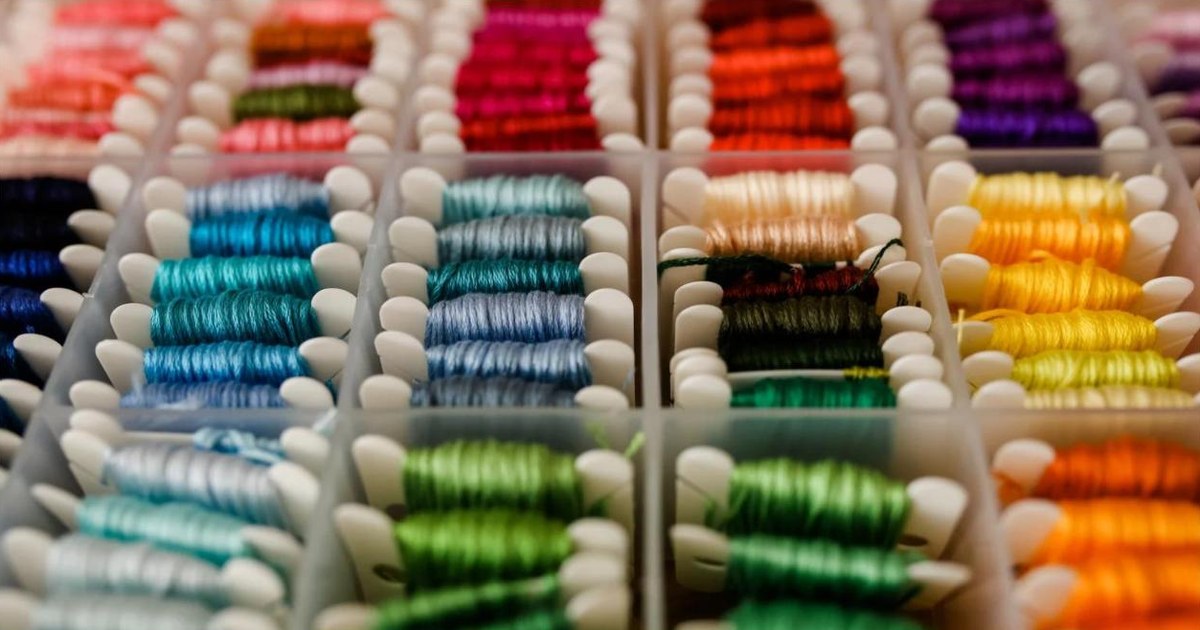
Quick answer: Standard embroidery floss is made of 6 thin strands twisted together. To use it, cut a length about 18 inches (45 cm) long, separate the number of strands you need (usually 2–3) by pulling them out one at a time, then put them back together and thread your needle. Fewer strands give fine lines, while more strands give bold lines and faster fills. Start with a waste knot or loop start, and keep the floss short to prevent tangles and fraying.
Embroidery thread can be confusing at first: it comes in skeins, strands and different weights. Here's how to use embroidery thread properly, from separating strands to threading the needle and keeping it tangle-free.
Types of Embroidery Thread
- Stranded cotton floss: the most common thread, made of 6 divisible strands. Used for most hand embroidery and cross-stitch.
- Perle (pearl) cotton: a twisted, non-divisible thread with a glossy finish, great for bold stitches.
- Metallic thread: adds sparkle but tangles easily; use short lengths.
- Silk and rayon floss: very shiny and smooth, for luxury pieces.
- Crewel wool: fine wool for textured crewel embroidery.
- Machine embroidery thread: usually 40-weight polyester or rayon on spools.
How to Use Embroidery Floss: Step by Step
- Find the end: hold the skein by the label and pull the loose end that comes out easily.
- Cut a length: about 18 inches, roughly the length from your fingertips to your elbow.
- Separate strands: pinch the top and pull out one strand at a time. This keeps the floss smooth and prevents knots.
- Recombine: lay the strands back together to the thickness you need.
- Thread the needle: flatten the ends with your fingers or use a needle threader.
- Start securely: use a waste knot, a small knot on the back or a loop start (for an even number of strands).
- Stitch and re-thread: when about 3 inches remain, weave the end under stitches on the back and start a new length.
How Many Strands Should You Use?
- 1 strand: tiny details, faces and fine shading
- 2 strands: lettering, outlines and most detailed work
- 3 strands: general outlines and fills
- 4–6 strands: bold lines, French knots and quick textured fills
How to Stop Embroidery Thread From Tangling
- Use shorter lengths (18 inches or less).
- Separate strands individually before using them.
- Let the needle hang and untwist every few stitches.
- Run floss over a thread conditioner or beeswax, especially metallics.
- Store floss on bobbins or in labeled bags to keep it organized.
Frequently Asked Questions
Do you separate embroidery thread?
Yes, for most projects. Stranded floss has 6 strands, and most designs use 2–3 at a time.
How long should embroidery thread be?
About 18 inches (45 cm). Longer threads tangle, fray and lose their sheen.
Can I use sewing thread for embroidery?
You can for very fine details, but embroidery floss gives better coverage, color range and sheen.
What does the number on embroidery floss mean?
It's the color number used by the brand, so you can buy the exact shade again.
Start Stitching
Now that you know your thread, learn how to start an embroidery stitch and practice French knots.
Prefer ready-made embroidery? Shop our embroidered T-shirts.