You open the package and the brand-new shirt already looks a little tired. The sage green reads chalky, the collar is a shade darker than the chest, and the side seams have their own tone. If you ordered pigment dyed t shirts, nothing went wrong. That uneven, washed-out color is the whole reason people buy them.
Pigment dyed t shirts are cotton shirts colored with insoluble pigment that a binder holds on the outside of the fiber, set with heat. The color sits on the surface instead of soaking into the cotton. So the shirt looks soft and faded from day one, keeps fading with each wash, and varies a bit from piece to piece. They suit a vintage look, not orders where every shirt has to match exactly.
We are an embroidery shop, so this guide spends more time than most on what happens when thread meets that faded fabric. It also covers how to spot one before you buy and how to order custom shirts. The last part explains washing so the fade happens slowly.
What pigment dyed t shirts are
This part is for anyone comparing blanks or reading a product label for the first time. Pigment is a colored powder that does not dissolve in water, so it cannot bond with cotton the way regular dye does. Manufacturers mix it with a binder, a kind of glue, coat the garment, then heat it so the binder sets around the fiber.
The color ends up on the skin of each fiber. Wear and washing slowly rub it away, which is why the shirt softens in tone over months.
Pigment dyed vs garment dyed vs reactive dye
Three terms get mixed up on product pages. They describe different things.
- Reactive dye is the standard for most blank tees. The dye forms a chemical bond inside the cotton fiber, so the color is saturated and holds steady for a long time.
- Pigment dye is a type of colorant. It coats the fiber with the help of a binder, so the color is muted, rubs off slightly, and fades on purpose.
- Garment dyed describes timing, not chemistry. The shirt is sewn first and colored afterward. A garment dyed shirt can use pigment or reactive dye.
Many vintage-style tees combine the last two: sewn first, then colored with pigment. That pairing gives the strongest lived-in look, because the seams, collar and hem all take color a little differently.
Why no two shirts in an order look identical
Thick parts of a shirt soak up pigment at a different rate than flat panels. Ribbed collars, double-stitched hems and side seams usually come out darker or lighter than the body. Small differences between cotton batches add more variation. Expect it, and plan around it if a group needs to look uniform.
Other vintage finishes that get confused with pigment
Several finishes chase the same worn look by different routes. Knowing them helps when a listing just says "vintage wash."
- Acid wash uses bleach-soaked stones or sprays to strip color in spots. You get high-contrast marbling, closer to 80s denim than to a soft fade.
- Enzyme wash softens the fabric surface and removes loose fuzz. It changes the hand feel more than the color.
- Heather fabric mixes fibers of two or more colors before knitting. The speckled look is built into the yarn and does not fade like a coating.
- Sun-faded or overdyed tees start as one color and get a second treatment on top. Results depend heavily on the maker.
Pigment sits apart from all of these because the fade keeps going for the life of the shirt. An acid wash looks the same in a year. A pigment tee will not.
How to tell if a shirt is pigment dyed
This section helps when you are holding a shirt in a store or reading a vague listing online. Labels are not always clear, so a few quick checks help.
- Read the hang tag and inside label. Look for "pigment dyed" itself. "Garment dyed" alone does not tell you the dye type.
- Rub a damp white cloth on a dark pigment shirt for a few seconds. A faint tint on the cloth is normal for pigment and rare for reactive dye.
- Turn the shirt inside out. Pigment shirts often show lighter color inside the seam allowances and under the collar tape.
- Look at the color names. Pigment ranges lean toward dusty shades like sage, clay or faded black rather than bright primaries.
- Feel the fiber content tag. Synthetic gym tees almost never take pigment well, so a cotton or mostly cotton label is a good sign.
Who pigment dyed t shirts suit, and who should skip them
Use this part to decide before you spend money on a full order. The faded look helps some projects and hurts others.
Good fits
- People who want a shirt that looks owned for years on the first wear.
- Small brands, cafes and bands selling merch that should feel like clothing rather than a giveaway.
- Family trips and reunions where everyone matches by color family, not by exact shade.
- Gift buyers choosing for someone who already wears thrifted or vintage tees.
- Embroidered designs, since thread sits well on a soft, matte base.
Skip them when
- A logo color has to match a brand guide exactly.
- Staff uniforms must look the same across reorders placed months apart.
- The shirt will be washed hot, often, with white towels.
- You need sweat-wicking athletic fabric.
Embroidery on pigment dyed t shirts
This is the section for anyone planning a stitched design rather than a print. Embroidery and pigment fabric work well together, and the reasons are practical.
Why thread holds up on faded fabric
A print sits on top of the shirt. On pigment fabric that means ink is resting on a coating that is itself wearing away. Thread works differently. The needle pushes it through the cotton, so the design lives in the fabric, not on the surface.
We use French DMC thread, which does not fade or bleed. Over many washes the shirt gets lighter while the thread keeps its color. On a pigment tee the contrast between design and background grows a little with age, the reverse of a print that cracks and dulls. Our comparison of how embroidery and screen printing last over time goes into that in more detail.
One more practical point. Every design we stitch has a stabilizer layer on the back, which keeps the fabric flat under dense stitches. That matters on a soft, broken-in cotton, which puckers more easily than a stiff new tee.

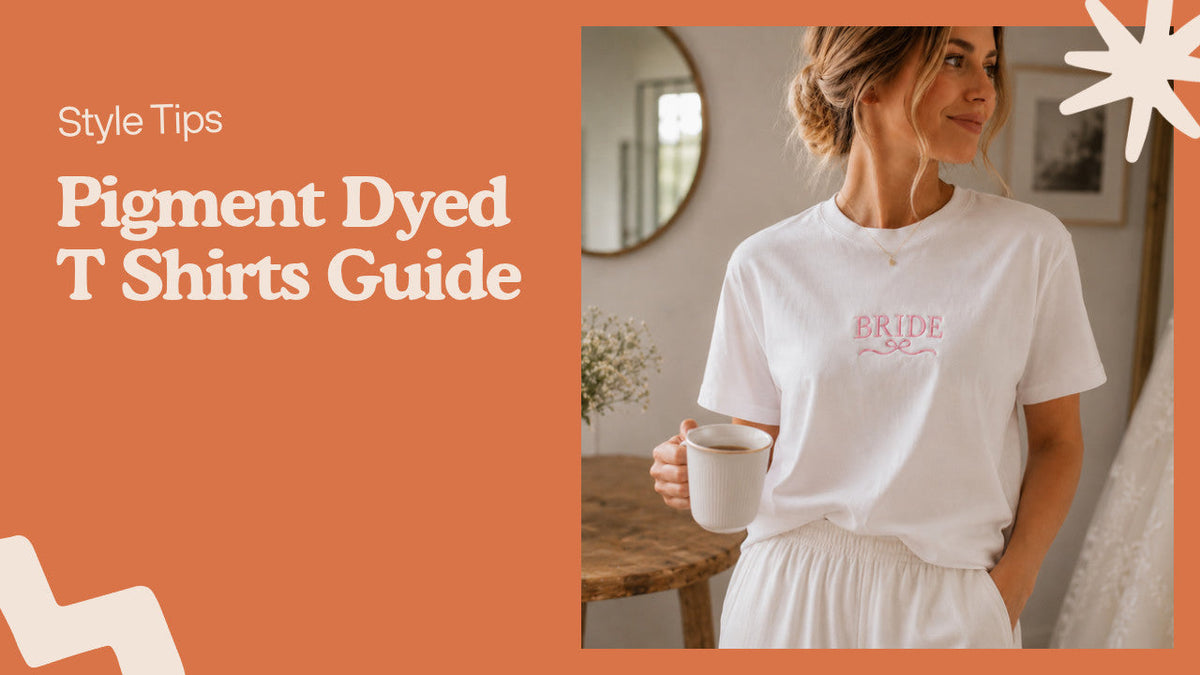
Take the Bow Bride embroidered t-shirt. It has one short word and a small bow at mid-chest, stitched in pink on white. Small chest designs like this suit pigment fabric because they do not stiffen a large area of a soft shirt.
Picking a thread color for a faded shirt
Pigment colors are muted, so thread close to the shirt color disappears. Sage thread on a sage tee reads as a smudge from three feet away. Pick thread at least two steps lighter or darker than the fabric.
Cream, off-white and black work on almost every dusty shade. Hot pink or royal blue thread looks louder than usual against a faded base. That is fine if you want the design to stand out. Many of our designs let you choose both shirt color and thread color, so try a couple of pairings first.
Printing on pigment dyed custom t shirts
If your design is a full-color photo or a large graphic, printing may still be the better route. Each method behaves a little differently on pigment fabric.
- Screen printing with plastisol ink covers well, because it forms a solid layer on top of the fabric. Light ink on dark pigment colors can pick up a tint when cured, so printers use low-bleed ink for those combinations.
- Discharge printing removes reactive dye with a chemical. Pigment is a coating, not a bonded dye, so discharge gives patchy results and most printers advise against it.
- DTG and DTF printing are possible on colored pigment shirts, but they need pretreatment, and results vary by color. Our guide to digital printing for custom t-shirts explains both.
Whatever the method, ask for a test piece on your exact shirt color. The fabric is a variable here in a way it is not with standard blanks.
How to order pigment dyed custom t shirts, step by step
Follow these steps if you are ordering for a group, a small brand or a single gift. They keep surprises out of the box.
- Decide whether the shirts must match exactly. If yes, choose reactive-dyed blanks instead and stop here.
- Pick a color family and accept small shade differences. Ask the seller whether all shirts will come from the same dye batch.
- Choose embroidery or print based on the design. Text and small logos suit embroidery. Photos and large full-color art suit print.
- Set thread or ink colors with enough contrast against the muted fabric.
- Check sizing. Many pigment tees are cut relaxed, so measure a shirt the wearer already likes.
- Look up production and shipping time and work backward from your date.
- Send care notes with the shirts so nobody washes them hot with white towels.
Gift-buying mistakes to avoid
This section is for anyone buying a faded tee, or an embroidered sweatshirt, as a present. Most problems come from sizing and timing, not from the shirt itself.
Sizing up out of habit is the first trap. Relaxed cuts are already roomy, and adding a size on top can swallow the wearer. On our shop, sizes are unisex and run true to size with a relaxed fit. If someone sits between two sizes, go up one, not two.
Ordering a personalized piece and hoping to return it later is another. Personalized items cannot be returned, so check the spelling of every name before checkout. Unpersonalized items can come back within 30 days if they are unworn and unwashed.

Leaving it to the last week causes the third. Our pieces are made to order: 1-3 business days to stitch, then 2-4 days in transit, so 3-7 business days in total. Weekends and US holidays do not count, so order at least 10 days before you need it. A dry joke like the Sorry About the Things I Said When I Was Right sweatshirt lands better on time than a week late.
Finally, match the joke to the person. A sarcastic line that suits a sibling may not suit a new coworker. Pick the milder design when you are unsure.
How to wash pigment dyed t shirts
Read this before the first wash, especially if the shirt is dark. Pigment loosens a little each cycle, and heat speeds that up.
- Wash the first two or three times with similar colors only. A small amount of loose pigment can come off early.
- Turn the shirt inside out. That protects both the coated surface and any embroidery.
- Use cold water on a gentle cycle.
- Skip bleach and fabric softener. Bleach attacks the binder and leaves blotches.
- Tumble dry on low heat or hang it to dry.
- Never iron directly over embroidery. Iron from the inside, or put a cloth between the iron and the design.
- Fold rather than hang heavier pieces, so the shoulders do not stretch.
Even with good care the color will soften. That is the point of the shirt. Our full guide on washing embroidered clothing without ruining it covers stains and drying in more depth.
Embroidered shirts from our shop
This part is for readers who want a stitched design now rather than sourcing blanks. Our listings do not state the dye method of each blank. Treat these as embroidered shirts in soft, muted colors, not as a pigment dyed product line.
Sweatshirts make up most of our catalog. They are heavyweight cotton and fleece in a relaxed cut, and the fabric is pre-shrunk, so it shrinks less than 5% when washed cold. The Call Me King Arthur 'Cause I Camelot shirt puts a pun in black thread on sport grey. That grey sits close to the dusty tones pigment fans like.

For a family joke, I Come From A Long Line Of People puts four lines of black lettering on a light sand crewneck. Want a name or a custom word instead? Browse our personalized embroidered gifts, or start with the best sellers to see which designs people reorder.
Every new design gets a test run on scrap fabric before it goes on a garment. Got a stitching mistake or a defect? Send us a photo within 7 days. We replace the piece at no cost, and you do not have to mail the original back.
FAQ about pigment dyed t shirts
What are pigment dyed t shirts?
They are cotton shirts colored with insoluble pigment that a binder holds on the fiber surface. The result is a soft, faded color that keeps lightening with each wash.
Is pigment dyed the same as garment dyed?
No. Pigment dyed names the type of colorant, and garment dyed means the shirt was colored after sewing. Many vintage-style tees use both.
Do pigment dyed shirts bleed in the wash?
Dark colors can release a little loose pigment in the first few washes. Wash them with similar colors in cold water until the runoff stops.
Why is my pigment dyed shirt darker at the seams?
Seams, collars and hems are thicker, so they take up pigment differently from the flat body. It is a normal trait of the process, not a defect.
Can you embroider on a pigment dyed t shirt?
Yes. Thread is stitched through the cotton rather than resting on the coating, so the design keeps its color while the fabric fades around it.
What thread color works best on pigment dyed fabric?
Pick thread clearly lighter or darker than the shirt, such as cream, off-white or black on dusty shades. Thread close to the fabric color becomes hard to read.
Do pigment dyed t shirts shrink?
Most pigment tees are pre-washed before sale, so shrinkage is small when you wash cold and dry on low heat. Hot water and high heat raise both shrinkage and fading.