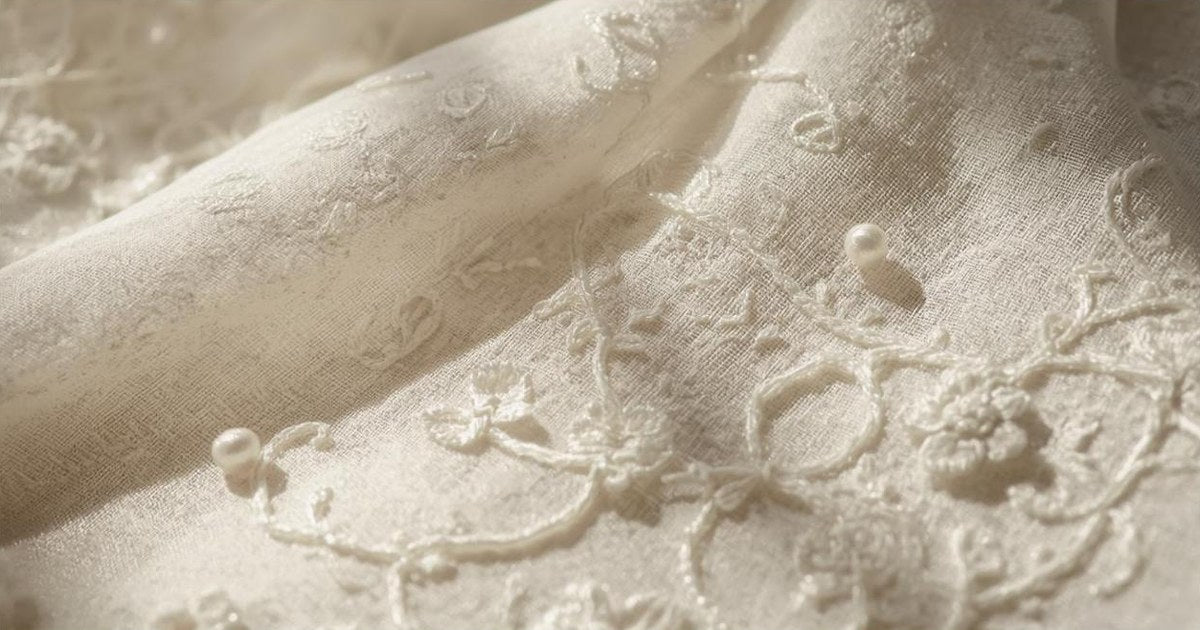
Quick answer: Chikankari is a traditional hand-embroidery style from Lucknow, India. It is known for delicate white-on-white floral patterns stitched on light fabrics such as muslin, cotton, georgette and chiffon. Artisans print a design onto the fabric with washable ink, then stitch it with fine thread using around 30 techniques, including shadow work (bakhiya), tiny knots (phanda) and openwork (jaali). The finished piece is washed to remove the ink, leaving soft, lace-like embroidery.
Chikankari has been worn and treasured for centuries, and today it shows up on everything from summer kurtas to wedding outfits and table linens. Here's what makes chikankari special, how it's made and how to care for it.
Where Does Chikankari Come From?
Chikankari is closely linked to the city of Lucknow in Uttar Pradesh, India, where it flourished under the patronage of the Mughal and Nawabi courts. The name is often traced to a Persian word meaning embroidery. Lucknow is still the main center of chikankari work, and the craft has a Geographical Indication (GI) tag that links it to the region.
What Makes Chikankari Different?
- White-on-white tradition: classic chikankari uses white thread on white or pale fabric, although colored versions are popular today.
- Light, sheer fabrics: muslin, mulmul cotton, voile, georgette and chiffon let the shadow stitches show through.
- Floral and vine motifs: flowers, leaves, paisleys and creepers inspired by Mughal art.
- Fine, hand-made stitches: real chikankari is stitched entirely by hand, so no two pieces are exactly alike.
Common Chikankari Stitches
- Bakhiya (shadow work): a herringbone stitch worked on the back of sheer fabric so a soft shadow shows on the front.
- Phanda: tiny knotted dots, similar to French knots, used for flower centers and fillings.
- Murri: small rice-shaped knotted stitches.
- Jaali: openwork that creates a net-like effect by pulling threads apart without cutting the fabric.
- Tepchi: a long running stitch used for outlines and stems.
- Keel kangan and hool: stitches used for petals and small eyelet-like flowers.
How Chikankari Is Made
- Cutting: the garment pieces are cut before stitching.
- Block printing: the design is printed onto the fabric with wooden blocks and washable ink.
- Embroidery: artisans stitch the design by hand. A detailed piece can take days or even weeks.
- Washing: the piece is washed to remove the printed lines.
- Finishing: it is starched and pressed for a crisp look.
How to Spot Real Hand-Made Chikankari
- Check the back. Hand embroidery has small, slightly irregular stitches and thread tails; machine work looks uniform with bobbin thread.
- Look for shadow work on sheer fabric. Machine imitations rarely reproduce bakhiya convincingly.
- Expect small imperfections. They are a sign of handwork, not a flaw.
How to Care for Chikankari
- Hand wash in cold water with a mild detergent, or dry clean delicate georgette pieces.
- Don't wring or twist the fabric.
- Dry in the shade to protect the fabric and thread.
- Iron on the reverse side with a cloth on top so the embroidery isn't flattened.
Frequently Asked Questions
What does chikankari mean?
Chikankari refers to the traditional hand embroidery of Lucknow, India. The word is usually linked to a Persian term for embroidery.
Is chikankari only white?
Traditionally it was white thread on white fabric, but today you'll find chikankari in pastel and bright colors too.
How long does chikankari take to make?
Simple pieces may take a day or two, while heavily embroidered garments can take several weeks of handwork.
Can I learn chikankari at home?
Yes. Start with basic running stitch, backstitch and French knots, then practice shadow work on sheer cotton voile.
Explore More Embroidery Traditions
Chikankari is one of many beautiful regional embroidery styles. Read about Japanese sashiko and crewel embroidery, or start with the basics in what is embroidery.
Love embroidered clothing? Browse our embroidered T-shirts.