You finish a monogram on velvet, lift the hoop, and the letters have sunk into the pile as if nobody stitched them. Embroidery on velvet fails in exactly that way unless you deal with the nap, the hoop and the topping before the first stitch.
To embroider on velvet, float the fabric on sticky cutaway stabilizer instead of hooping it. Add a water-soluble topping, pin the layers, and stitch a medium-density design slowly with a new 75/11 needle. That setup keeps the pile from crushing and stops the thread from sinking.
The rest of this guide covers velvet embroidery on a home machine. It runs from picking a design to steaming the finished piece, with fixes for the most common problems.
What makes velvet hard to embroider
Read this first if your last attempt left hoop marks or thin, patchy lettering.
Velvet has a pile, a layer of short upright fibers called the nap. Thread lands on top of the pile at first, then drops between the fibers, so fine lines disappear. Hoop pressure flattens the pile and leaves a shiny ring that can be stubborn to remove.
Velvet also creeps under the presser foot. Without support, the outline drifts away from the fill and the whole design looks off register.
Embroidery on velvet, what to gather
This list works for any home machine and for cotton, rayon or polyester velvet.
- Velvet, plus a scrap cut from the same piece for a test stitch-out
- Medium-weight cutaway stabilizer
- Temporary spray adhesive
- Lightweight water-soluble topping
- A new 75/11 needle, ballpoint if the velvet stretches
- Fine pins and a soft brush
- A handheld steamer, or an iron with a steam setting and a pressing cloth
Embroidered velvet material, what stitches well
Choose the design before you cut the fabric, because the pile decides which designs survive.
Medium-density designs with bold outlines and wide fills show up best. Thin running stitches, redwork and tiny text get swallowed by the nap. For lettering, pick a heavy block alphabet over a thin script. Our guide to embroidering letters covers spacing and stitch choices you can borrow for machine layouts.
We stitch every new design on scrap fabric first to adjust stitch density before it goes on a garment. Do the same with velvet. A design that looks crisp on cotton can sink on pile.
Velvet vs velour
Velour is a knit, so it stretches more than woven velvet. Embroidery on velour calls for a ballpoint needle, a firm cutaway stabilizer and a topping. If the fabric relaxes after stitching, outlines pucker, so stabilize it more than you think you need to.
How to embroider on velvet, step by step
Use these steps for a first project such as a pillow cover, a pouch or a panel for a dress.
- Stitch a test on a scrap of the same velvet and check it in daylight, not under the machine light.
- Spray the cutaway stabilizer lightly with temporary adhesive.
- Hoop only the stabilizer, drum tight, then smooth the velvet over it along the direction of the nap.
- Lay the water-soluble topping over the velvet and pin every layer close to the hoop edge, well clear of the design.
- Fit a new 75/11 needle and set the machine below its usual speed.
- Watch the first minute of stitching for creep, flagging or thread breaks.
- Take the hoop off the machine and trim the cutaway stabilizer close to the stitches on the back.
- Pull the topping away from the front, then steam the pile from the back so it stands up again.

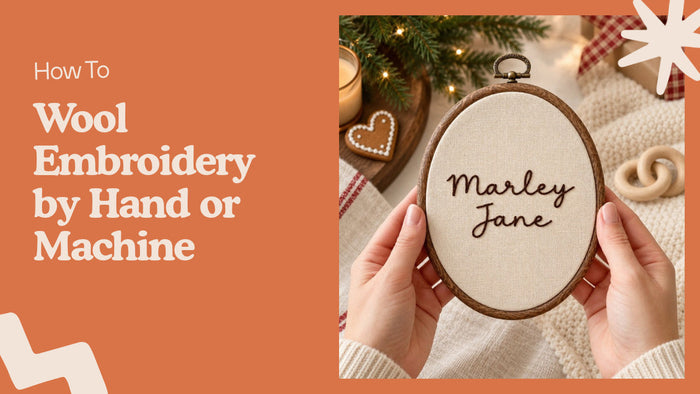
An oval hoop like this one is fine on flat cotton or linen. On velvet it is the stabilizer that goes in the hoop, never the fabric itself.
Needle board for velvet
A needle board for velvet is a pad of fine upright wires. Lay the velvet pile-side down on it and steam from the back, and the pile stays upright. It helps with finishing and creases, but it does not replace stabilizer while you stitch. With no needle board, a thick towel under the fabric does a softer version of the job.
Embroidery on velvet dresses
For embroidery on velvet dresses, stitch the panel before you sew the garment, so it lies flat on the stabilizer. Mark the placement with basting thread, since chalk rarely shows on deep pile. On a finished dress, float only the area you are stitching and keep the lining and skirt out from under the needle. Test on a seam allowance first.
Machine embroidery on velvet, settings that help
This section is for anyone whose stitches fray or break halfway through a design.
Slow the machine down. Velvet is dense and dulls needles quickly, so change the needle before each project. A thread with some sheen stands out against a matte pile, which gives the design more contrast than a flat cotton thread would.
Detailed designs take longer on velvet because of the slower speed. On our machines, a detailed design runs about 4 to 9 minutes at normal speed, so plan for more than that.
Common problems with velvet embroidery and fixes
Match what you see on your piece to the fix below.
- Hoop marks show around the design. Steam the area from the back, brush the pile lightly, and float the fabric next time.
- Stitches sink into the pile. Add a water-soluble topping and move to a bolder design.
- Fabric puckers around the stitches. Switch to a firmer cutaway stabilizer and avoid pulling the velvet while you pin.
- Thread keeps snapping. Put in a new needle and lower the speed.
- The needle hits a pin. Move the pins closer to the hoop edge.
- White flecks of topping remain. Dab them with a damp swab, only if the care label allows water.
Caring for embroidered velvet
Check the care label before anything else, because many velvets are dry-clean only.
Steam the pile from the back instead of pressing it, and never put an iron straight onto the stitches. Our guide to washing embroidered clothing lists the general rules for thread and fabric that can go in water. We only embroider, because thread sits in the fabric rather than on top of it. Our post on embroidery vs screen printing explains how the two age differently.
New to stitching by hand? Start with how to embroider on cotton, then move up to pile fabrics.
Embroidery on velvet FAQ
Can you machine embroider on velvet?
Yes. Float the velvet on cutaway stabilizer, add a water-soluble topping and choose a medium-density design.
Should you hoop velvet?
No. Hooping crushes the pile and leaves a ring, so hoop the stabilizer and pin the velvet on top.
What needle is best for embroidery on velvet?
A new 75/11 needle suits most velvet. Use a ballpoint needle for stretch velvet and velour.
How do you embroider on velour?
Treat velour like stretch velvet. Use a ballpoint needle, a firm cutaway stabilizer and a topping, and keep the fabric from stretching as you pin it.
What is a needle board for velvet used for?
It holds the pile upright while you press or steam, so the velvet does not flatten or show marks.
Can you embroider on velvet dresses?
Yes. Stitch the panel before assembly when you can, or float only the target area on a finished dress and test on a seam allowance.
Want a name stitched for you
Not every project needs a stabilizer stack and a test swatch. If you want embroidery on a finished piece, browse our personalized embroidered gifts.
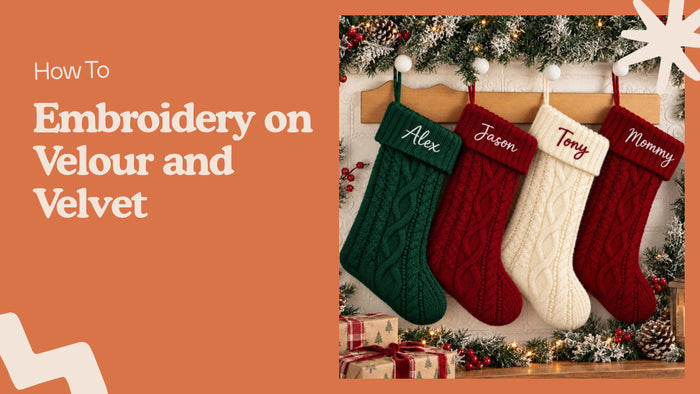
The custom name embroidered Christmas stocking has the name stitched on the cuff. The personalized embroidered name hoop uses ivory canvas with dark brown thread. We make each one to order, and the total time from order to delivery is 3 to 7 business days. Order at least 10 days before you need it.

Our best sellers are another place to start if you are choosing a gift.