The best embroidery machine for beginners is a single-needle home machine with a 4 x 4 inch or 5 x 7 inch hoop. Look for built-in designs and lettering, a clear display, and USB or wireless design transfer. Choose an embroidery-only model if you only want to embroider. Choose a sewing and embroidery combo if you also plan to sew garments and quilts.
This guide covers the features that matter, the ones you can skip, and what else you need to buy before your first project.
How a home embroidery machine works
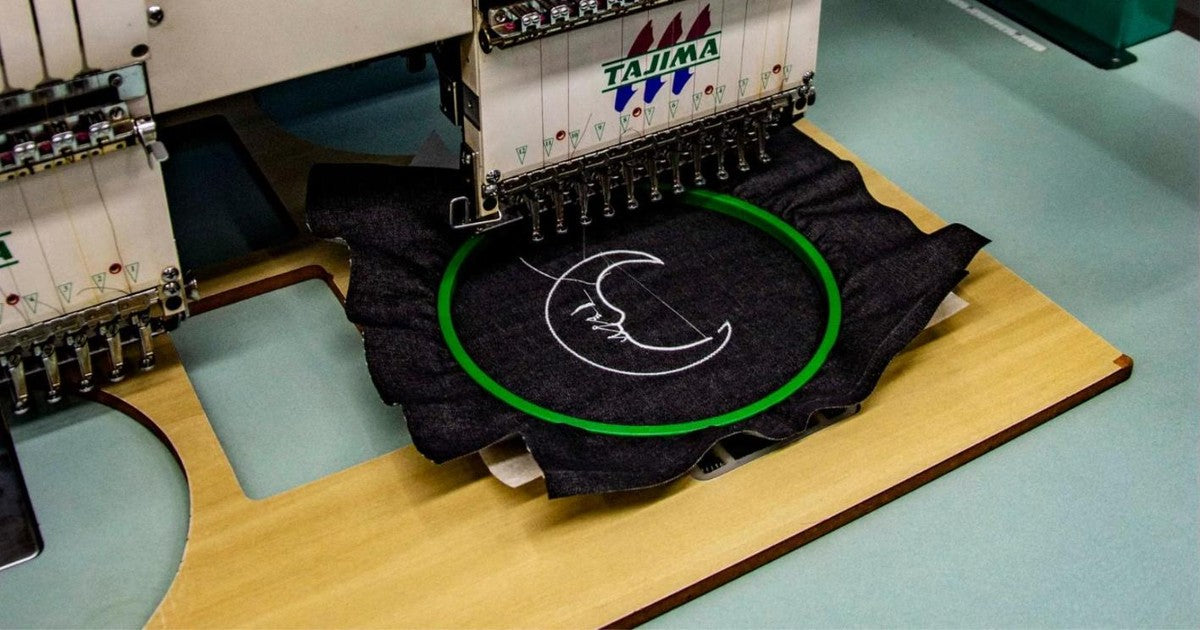
You load a digital design file, hoop your fabric with stabilizer, and attach the hoop to an arm that moves it under the needle. The machine stitches each color in order and stops when it is time to change thread. You do not guide the fabric by hand. For a full explanation, read how embroidery machines work.
Features to look for
Hoop size
The hoop size sets the largest design you can stitch in one go. A 4 x 4 inch field fits monograms, small logos and patches. A 5 x 7 inch field fits most shirt fronts, tote bag designs and towel borders. If your budget allows, 5 x 7 is the size beginners outgrow the least.
Built-in designs and fonts
Built-in motifs and alphabets let you stitch on day one without buying files. Check how many fonts are included and whether you can resize and combine letters on the screen.
Design transfer
Most machines read designs from a USB stick. Newer models add Wi-Fi and a phone app. Either works; USB is simpler and does not depend on an account.
File format
Each brand reads its own format. Brother and Baby Lock use PES, Janome uses JEF, Bernina uses EXP, and many commercial machines use DST. Make sure the designs you plan to buy come in your machine's format.
Automatic features
An automatic needle threader and thread cutter save time on every color change. A clear display that shows the next color and stitch count helps you avoid mistakes.

Embroidery-only or combo machine?
| Embroidery-only | Sewing and embroidery combo | |
|---|---|---|
| Best for | Monograms, patches, gifts, small business tests | People who sew clothes, quilts or home decor |
| Setup | Embroidery unit always attached | Swap the embroidery unit on and off |
| Space | Needs one spot on the table | One machine for two jobs |
| Trade-off | Cannot sew seams | Embroidery and sewing cannot run at the same time |
Single-needle vs multi-needle
Single-needle home machines hold one thread color at a time, so you change thread by hand for each color. Multi-needle machines hold 6 to 15 colors and change on their own. They are faster for orders of hats and shirts but cost several times more and take longer to learn. Most beginners start with a single needle.
What else you need
- Embroidery thread: 40-weight polyester or rayon in a starter set of colors.
- Bobbin thread: lighter 60- or 90-weight thread, usually white or black.
- Stabilizer: cut-away for knits like T-shirts, tear-away for woven cotton, and water-soluble for towels and lace.
- Embroidery needles: size 75/11 for most fabrics, ballpoint for knits.
- Small curved scissors for trimming jump stitches.
- Temporary spray adhesive, optional, for floating fabric on stabilizer.
First projects to try
- A monogram on a cotton tea towel.
- A name on a canvas tote bag.
- A small motif on a sweatshirt. See how to embroider a sweatshirt.
- An iron-on patch. Follow how to make patches with an embroidery machine.
Common beginner mistakes
- Skipping stabilizer, which causes puckers and gaps.
- Hooping fabric too loose or stretching knits while hooping.
- Using sewing thread on top, which looks dull and breaks more often.
- Choosing very dense designs for thin fabric.
Frequently asked questions
Is machine embroidery hard to learn?
No. Most people stitch a clean first design within a day. The skills that take practice are hooping, choosing stabilizer and editing designs.
Can a regular sewing machine do embroidery?
Not automatically. You can do free-motion embroidery with a darning foot and dropped feed dogs, but you move the fabric yourself. Read how to embroider with a sewing machine.
Do I need digitizing software?
Not at first. Built-in designs and purchased files are enough. Software becomes useful when you want to turn your own artwork into stitch files. Learn more in what is embroidery digitizing.
What size hoop should a beginner get?
A 5 x 7 inch hoop covers most shirts, bags and towels. A 4 x 4 inch hoop is fine if you mainly stitch monograms and small logos.
Keep learning
Once your machine is set up, follow our step-by-step guide on how to use an embroidery machine. Want to see what finished machine embroidery looks like? Browse our embroidered T-shirts and embroidered hats and caps.