
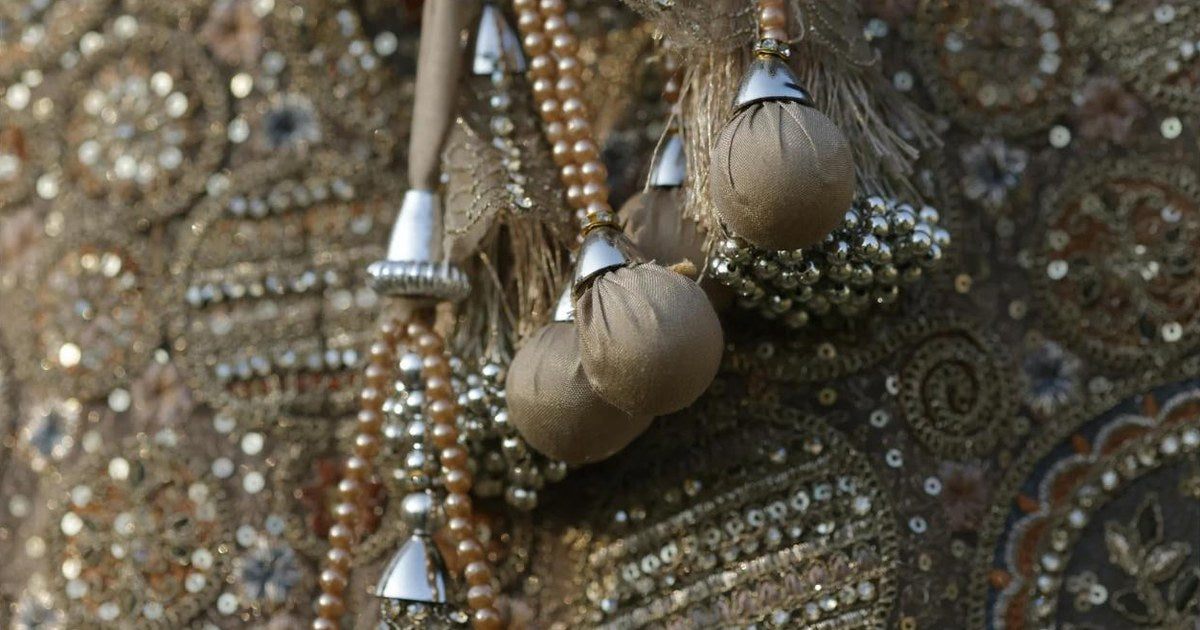
Quick answer: To do bead embroidery, hoop a sturdy fabric (or fabric backed with stabilizer) and thread a beading needle with strong beading thread, then knot it. Bring the needle up where the bead should sit, slide the bead on, and go back down one bead-width away. For lines, use the backstitch bead method: string 2–4 beads, go down, come back up between them, and pass through the last beads again. Secure the thread with a few small stitches on the back.
Bead embroidery adds sparkle, texture and dimension to hoops, clothing, bags and jewelry. It uses many of the same ideas as regular hand embroidery, but with beads, sequins and a stronger thread. Here's how to get started, the basic bead stitches, and tips for a neat, durable finish.
What You Need for Bead Embroidery
- Fabric: tightly woven cotton, linen, felt, velvet or denim. Add a stabilizer behind lightweight fabric.
- Beads: seed beads (size 11/0 is the most common), bugle beads, sequins and accent beads.
- Beading needle: long and very thin (size 10–12) so it passes through small seed beads.
- Beading thread: nylon (such as Nymo or One-G) or braided thread. It's much stronger than embroidery floss.
- An embroidery hoop, small scissors and a bead mat or dish to keep beads from rolling.
How to Start Bead Embroidery: Step by Step
- Transfer your design. Draw it lightly onto the fabric with a water-soluble or heat-erasable pen.
- Hoop the fabric until it's drum-tight.
- Thread and knot. Cut about 18–24 inches of beading thread, thread the needle, and tie a knot. Make a tiny anchor stitch on the back.
- Add the first bead. Bring the needle up on your design line, pick up one bead, and go down right at the end of the bead so it lies flat.
- Continue the line. Use the backstitch bead method (below) to add beads quickly in rows.
- Secure often. Every 5–10 beads, make a tiny stitch on the back so one broken thread won't undo the whole design.
- Finish. Tie off with 2–3 small knots on the back and weave the tail under nearby stitches.
Basic Bead Embroidery Stitches
- Single bead stitch (seed stitch): one bead per stitch. It's great for scattered sparkle and fills.
- Backstitch bead method: string 2–4 beads, go down at the end of the row, come up between beads, and pass back through the last 1–2 beads. It makes smooth lines and outlines.
- Couching: string a long row of beads, lay it along the line, then tack it down with small stitches between beads every 2–3 beads. It's ideal for curves.
- Stacked or stop stitch: a larger bead or sequin held in place by one small seed bead on top.
- Lazy stitch: several beads laid in short parallel rows, often used in Native American beadwork to fill areas quickly.
- Sequin stitch: bring the needle up through the sequin hole and anchor it with one stitch to the side, or with a seed bead.
How Do You Keep Beads From Falling Off?
Use strong beading thread instead of floss, and double it for heavy beads. Add anchor stitches on the back every few beads, and pass the thread through each row twice when you can. For wearable pieces, avoid long loose stitches on the back.
Tips for Beautiful Bead Embroidery
- Wax or condition your thread to reduce tangles.
- Keep tension firm but not tight, or the fabric will pucker.
- Sort beads by color in a divided dish before you start.
- Outline shapes first, then fill them in.
- Hand-wash beaded clothing gently, or spot-clean it.
Frequently Asked Questions
What thread is best for bead embroidery?
Nylon beading thread such as Nymo or One-G, or a braided thread like FireLine. It's thin enough for seed beads and much stronger than cotton floss.
Can you use a regular needle for bead embroidery?
Usually not. Regular embroidery needles are too thick for small seed beads. A size 10–12 beading needle works best.
What fabric is best for bead embroidery?
Tightly woven, stable fabrics such as cotton, linen, felt, denim or velvet. Lightweight fabrics need a stabilizer behind them.
Is bead embroidery hard for beginners?
No. If you can do a basic backstitch, you can do bead embroidery. Start with a simple outline design and single-bead fills.
Add Some Sparkle
Bead embroidery is an easy way to make your stitching shine. Start small with a beaded flower or monogram, then try mixing beads with thread stitches. New to embroidery? Start with our guide on how to embroider and how to backstitch.
Looking for a finished gift? Explore our personalized embroidered gifts and gifts for her.


